
River Arts District Galleries: A Local's Guide
Table of Contents
- What Makes River Arts District Galleries Unique
- Visiting Artist Studios in Asheville's Creative Hub
- Best Art Galleries in Asheville's River Arts District
- River Arts District Events and Exhibitions
- Curated Art Experiences by Interest
- Navigation, Parking, and Practical Logistics
- Frequently Asked Questions
Last Updated: October 2, 2026
What Makes River Arts District Galleries Unique
The River Arts District stands apart as one of the most vibrant creative communities in the Southeast. What distinguishes the river arts district galleries here isn't just the volume of working artists, it's the direct access to creators themselves. You're not walking through a curated museum experience; you're stepping into active studios where painters, ceramicists, sculptors, and textile artists are actively working at their easels, wheels, and looms.
This accessibility changes everything. Unlike traditional gallery spaces where art is behind glass and artists are invisible, the river arts district galleries in this area operate as open studios. You can watch oil paintings take shape, ask questions about technique, commission custom pieces, and build relationships with the artists themselves. The creative community here thrives on that direct engagement.
The district's location along the French Broad River adds another layer of character. Many of the working studios occupy converted warehouse and industrial spaces that have been transformed into galleries and creative hubs. This artistic heritage, combined with the natural landscape that inspires so many local painters and sculptors, creates an environment where fine art feels inseparable from the place itself.
Visiting Artist Studios in Asheville's Creative Hub
Studio Visits and Direct Artist Engagement
Walking into a working artist's studio is fundamentally different from entering a gallery. You're entering someone's creative workspace, their lab, their sanctuary, their office. The river arts district galleries operate this way intentionally. Artists here welcome visitors not as an afterthought but as an integral part of their practice. This model reflects a broader shift in how fine art is sold and experienced.
Direct artist engagement matters for several reasons. First, you get the full story behind each piece. A landscape painting isn't just brushwork and color, it's the artist's relationship with a specific place, their technical choices, their artistic evolution. When you hear that story directly from the creator, the work deepens. Second, you can commission custom pieces. If you love an artist's style but need something tailored to your space or vision, most working artists in the district accept commissions. Third, you understand the value. Seeing the effort, skill, and time involved in creating original oil paintings or fine art Giclées makes the investment feel justified rather than arbitrary.
What to Expect During a Studio Visit
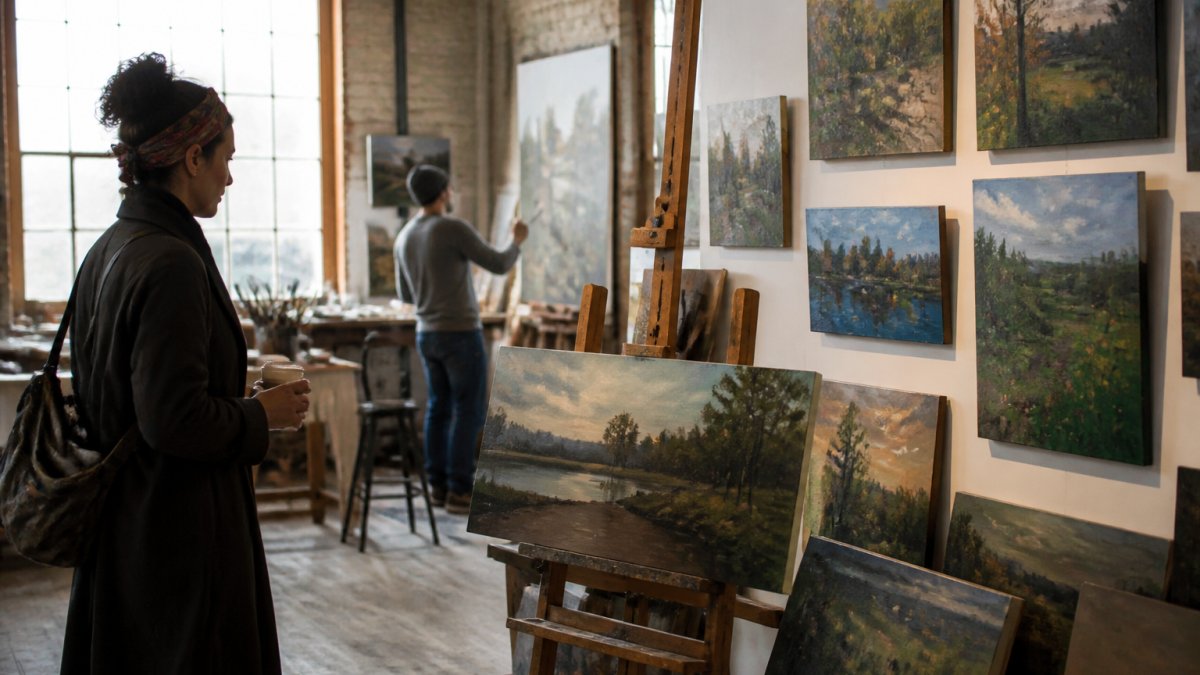
Studio visits in the river arts district galleries follow an informal rhythm. You'll typically walk in during open hours, many studios operate Saturday and Sunday afternoons, plus extended hours during the monthly gallery crawl. There's no admission fee. You're free to browse at your own pace, examine work closely, and ask questions.
Most artists are genuinely happy to talk about their work. They'll explain their process, discuss the inspiration behind specific pieces, and answer questions about materials and techniques. If you're interested in a particular painting or print, they can discuss pricing, framing options, and whether the piece is available for immediate purchase or part of a commission queue.
The atmosphere is welcoming but not pushy. You won't feel obligated to buy. Many visitors come simply to see the work, learn about the artistic process, and soak in the creative energy of the space. Some return multiple times before deciding to purchase. Others visit just to experience the work without any intention to buy, and that's entirely accepted as part of the creative community's culture.
Best Art Galleries in Asheville's River Arts District
Downtown and River Arts Intersection Galleries
The intersection of downtown and the River Arts District creates a unique gallery landscape. Some of the most accessible and visitor-friendly spaces cluster in this zone, making it an ideal starting point for exploring the local art scene.
Jeff Pittman Art operates a working artist's studio at 362 Depot Street, right in the heart of the district. The studio features original oil paintings and fine art Giclées capturing landscapes and cityscapes with particular focus on local subjects. Studio visits are welcomed, you can see the work in progress, discuss custom commissions, and experience the artist's creative process firsthand. The collection includes pieces like Depot Street in Asheville's River Arts District, which captures the energy and character of the district itself, available as a fine art print for $38.00.

The downtown galleries extend the creative reach into Main Street and surrounding blocks. These spaces tend to feature a mix of established and emerging artists. You'll find everything from abstract mixed media to representational landscape paintings.
Several galleries in this zone specialize in particular media. Ceramics and pottery studios cluster near the river, where natural light and water access historically drew makers. Textile artists and jewelry designers occupy nearby spaces, creating a genuine mixed-media district rather than a painting-focused gallery walk.
Specialized Media and Fine Art Collections
The river arts district galleries aren't monolithic. Different studios and spaces emphasize different artistic approaches and materials.
The Wedge Brewery - River Arts District →
Glassblowing studios create some of the most visually striking work in the district. The process itself, molten glass, intense heat, real-time creation, draws visitors who want to watch the artistic process unfold. These studios typically offer demonstrations, especially during weekend visits and monthly art walks.
Sculpture studios range from figurative work to abstract installations. Many occupy larger warehouse spaces that allow for monumental pieces impossible in smaller galleries. Some sculptors work in traditional stone and bronze; others experiment with mixed media and found objects.
Painting remains the dominant medium, but the variety within painting is substantial. You'll find traditional oil landscapes, contemporary abstract work, street scenes, and experimental techniques. Many painters offer prints and Giclées alongside original canvases, a practical option for collectors who love the work but need a more accessible price point.
Fine art Giclées deserve particular attention. These are high-quality inkjet reproductions of original paintings, printed on fine art paper or canvas. When executed well, they capture the color, texture, and detail of the original work at a fraction of the cost. Artists like Jeff Pittman create Giclées that serve serious collectors as well as those building their first art collection.
River Arts District Events and Exhibitions
The river arts district galleries come alive during scheduled events. The monthly gallery crawl, typically held on the third weekend of each month, brings the entire creative community into focus. Studios stay open extended hours, many host artist demonstrations, and the streets fill with art enthusiasts, collectors, and curious visitors.
Curated Art Experiences by Interest
Landscape and Cityscape Collectors
If you're drawn to landscape and cityscape paintings, the river arts district galleries offer remarkable depth. The local landscape, mountains, river, urban architecture, inspires a significant portion of the district's working artists. This creates a natural advantage: the subjects depicted in the paintings surround you while you're viewing them.
Budget-Friendly Art Collecting Strategies
Collecting original art doesn't require unlimited funds. The river arts district galleries offer multiple entry points for collectors at different budget levels.
| Collection Strategy | Entry Price | Best For | Advantage |
|---|---|---|---|
| Fine Art Giclées | $38 | Building a diverse collection | Affordable access to established artists |
| Small Original Paintings | $150-$400 | Serious collectors on moderate budgets | Unique, handmade pieces with investment potential |
| Prints and Reproductions | $25-$50 | Casual collectors and gift-givers | Accessible price, variety of subjects |
| Commission Custom Work | $300-$1,500+ | Collectors wanting personalized pieces | Tailored to your space and vision |
Navigation, Parking, and Practical Logistics
The river arts district galleries spread across multiple blocks along Depot Street and adjacent streets. The layout is walkable, most of the main galleries cluster within a 10-minute walk of each other. However, understanding the geography makes your visit more efficient.
Frequently Asked Questions
Can I actually meet the artists when I visit River Arts District galleries?
Yes. Many galleries in the River Arts District operate as working artist studios where you can meet creators directly. Jeff Pittman Art, located at 362 Depot Street, welcomes studio visits where you can see the artistic process firsthand and discuss your interests with the artist. This direct engagement is one of the defining features that separates the River Arts District from traditional gallery experiences. Call ahead to confirm visiting hours, as some studios keep flexible schedules.
What's the best time to visit River Arts District galleries?
Weekday mornings typically offer a quieter experience where you can speak with artists without crowds. Weekends are busier but feature more organized events and exhibitions. Check the district's event calendar before your visit to align with exhibitions or special programming.
How do I know if original paintings will match my space before ordering?
Visiting the studio in person is the most reliable way to assess color accuracy and scale. Seeing original work under your own lighting conditions eliminates the disappointment of online-to-wall mismatches. Many artists, including Jeff Pittman, offer custom commissions so you can specify exact dimensions, color palettes, and subject matter. For prints like the fine art options at $38.00, you're investing less while still getting high-quality reproductions of original work. Always ask about return policies for online purchases.
Are there budget-friendly ways to collect art from River Arts District galleries?
Fine art prints and Giclées offer exceptional value compared to original paintings. Jeff Pittman Art produces museum-quality prints at $38.00, capturing the same artistic vision as original oil paintings at a fraction of the cost. Building a collection gradually through prints allows you to explore different styles and artists before committing to larger original pieces.